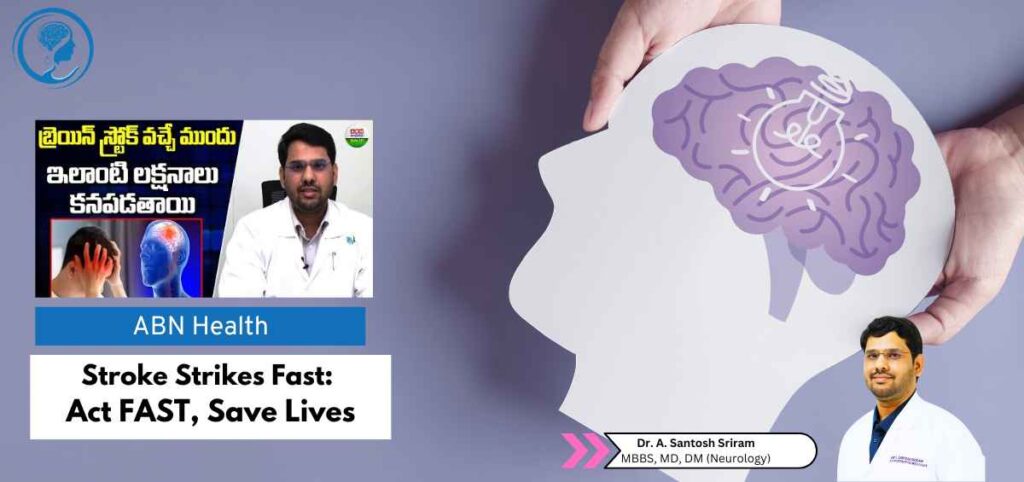
Stroke Awareness: Dr. A Santosh Sriram’s Expert Tips on ABN Health
Brain stroke happens when blood flow to the brain is blocked or a vessel bursts, causing damage within minutes if not treated promptly. There are two main types of strokes:
Ischemic stroke – caused by a blockage in the blood vessels leading to the brain, often due to clots.
Hemorrhagic stroke – caused by the rupture of a blood vessel in the brain, leading to bleeding.
Ischemic strokes are more common, but both require immediate medical attention.
Who Is at Risk of Brain Stroke?
Certain factors increase the risk of stroke. According to Dr. Santosh Sriram, the following conditions and habits are major contributors:
- Increasing age
- Uncontrolled high blood pressure
- Diabetes
- High cholesterol levels
- Obesity
- Smoking and alcohol consumption
Recognizing Stroke Early: The BE FAST Method
One of the most important aspects of stroke management is recognizing the symptoms early. Dr. Santosh recommends remembering the acronym BE FAST:
- B – Balance: Sudden loss of balance or difficulty walking
- E – Eyes: Sudden change or blurring of vision
- F – Face: Drooping on one side of the face while smiling or speaking
- A – Arms: Weakness or numbness in one arm compared to the other
- S – Speech: Slurred or difficult speech, or trouble finding words
- T – Time: Act fast — immediate medical care is critical
If any of these signs are noticed, it is vital to seek emergency stroke treatment in Hyderabad without delay.
Time-Critical Stroke Treatments
Dr. Santosh Sriram emphasizes that time plays a vital role in stroke cases — the faster treatment begins, the better the outcome.
- Thrombolysis: Within 4.5 hours of an ischemic stroke, patients can receive an injection called tissue plasminogen activator (tPA) to dissolve the clot and restore blood flow.
- Thrombectomy: For large vessel blockages, a wire can be used to remove the clot. This procedure is usually done within 6–16 hours but may extend up to 24 hours in selected cases.
- Wake-up strokes: For patients who wake up with stroke symptoms, advanced MRI techniques such as MR perfusion help determine eligibility for treatment.
Why Finding the Cause Matters
During emergency care, doctors also investigate why the stroke occurred. Causes may include:
- Blockages in carotid arteries
- Clots traveling from the heart to the brain (embolic stroke)
- Uncontrolled risk factors like cholesterol or diabetes
Based on the findings, treatments may involve blood-thinning medications, cholesterol management, and lifestyle changes to prevent future strokes.
Stroke Rehabilitation in Hyderabad
Even if clot-busting treatments are not possible, recovery does not stop there. Stroke rehabilitation in Hyderabad includes:
- Physiotherapy to restore strength and mobility
- Medications to prevent new clots
- Ongoing monitoring of blood pressure, diabetes, and cholesterol
With proper rehabilitation, many patients regain independence and improve their quality of life.
Takeaway:
Remember, the sooner a stroke is recognized, the better the recovery chances. Immediate action, combined with advanced treatments and rehabilitation, saves lives and reduces long-term disability.
Learn more about how to prevent strokes in young adults by visiting this detailed guide.
For anyone at risk or exhibiting warning signs of stroke, seeking care from Dr. A Santosh Sriram, consultant neurologist and one of the best neurologists for stroke in Hyderabad at Apollo Hospitals, can provide critical early intervention. Reach us here.